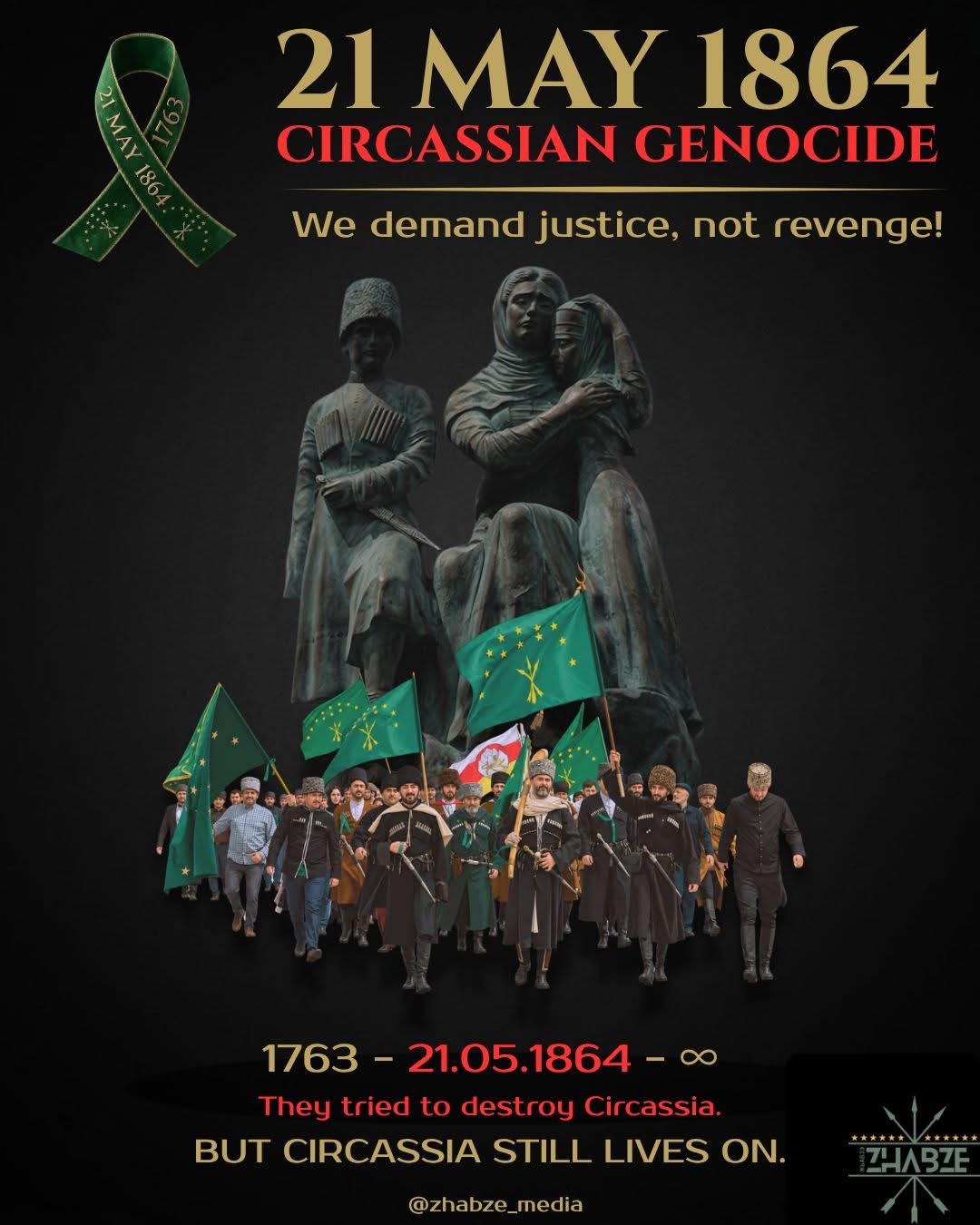
May 21 is not an ordinary day on the calendar; it is the symbol of the great catastrophe, genocide, and exile that the Circassian (Adyghe) people endured while defending their homeland, Circassia.
In line with its policy of depopulation and absolute occupation of Circassia, Tsarist Russia burned and destroyed our villages and annihilated our living spaces. During the century-long war, hundreds of villages were eradicated, and the vast majority of the population was either massacred or died under conditions of starvation, epidemics, and forced displacement. A significant portion of the survivors was forcibly exiled to Ottoman lands.
The objective was clear: to erase Circassia from the maps and the Circassian people from history. This war turned into a historical devastation that targeted not just a geography, but the memory, culture, and future of a people.
Despite the indescribable suffering they experienced, the Circassian people have never attributed the crimes of the Tsarist regime to the Russian people as a whole. They have continued to distinguish between the Russian people and the Tsarist absolutist regime. However, the legal and political heir to this historical crime today is the Russian Federation. It is now necessary to state the facts openly and ensure a democratic reckoning with the past.
Today, our demand is not hostility; it is a genuine peace built on justice between peoples, mutual trust, and the recognition of historical truth.
Our expectations from the Russian Federation are clear, legitimate, and a necessity of historical justice:
The consequences of the Russian-Circassian War must be evaluated legally and morally, and the Circassian Genocide must be officially recognized.
The Circassian people must be granted the status of an "exiled people," thereby ensuring compensation and the remediation of the consequences of this historical injustice.
The descendants of the exiled must be guaranteed the right to return to their historical homeland without facing any obstacles; this process must be conducted at the federal level and with the support of international organizations.
The fulfillment of this historical responsibility by the highest representative bodies of the state will not only heal the wounds of the past but also contribute to strengthening trust and mutual understanding between the Circassian people in the diaspora and the homeland, and the peoples of the Russian Federation.
Reckoning with the past does not create hostility among peoples; it forms the foundation of mutual trust and true peace.
A future where justice is established will open the door to a fairer and shared future for everyone.
 Facebook
  Twitter
  Pinterest
  Linkedin
  Tumblr
  vk
vk  Odnoklassniki
  Reddit
  Whatsapp
 Google Bookmarks